The Art of the Oner
If you've ever watched a corporate keynote and noticed a single, unbroken camera shot following a speaker across a stage, through the crowd, and out to a product demo, you're watching a video producer living out their film school dreams.
That's the oner. And for those of us in production, landing one is a badge of honor.
What Is a Oner?
A oner (also called a one-shot, single take, or long take) is exactly what it sounds like: a scene filmed in one continuous shot with no cuts. The camera moves, the actors move, the world unfolds in real time. No edits to hide behind. No safety net.
It's one of the oldest techniques in cinema, but it keeps coming back because when it works, nothing else feels like it.
Why Filmmakers Are Obsessed
An episode of The Studio on Apple TV+ captures this obsession perfectly. The entire episode is itself a oner, following Seth Rogen's character onto a film set where Sarah Polley is desperately trying to nail a single-take shot before sunset. It's chaotic, stressful, and painfully accurate.
Every filmmaker dreams of pulling one off. Why? Because a oner does something that edited sequences can't:
- It creates unbroken reality. When there are no cuts, the audience experiences time the way we experience life. You can't look away. You can't skip ahead. You're locked in.
- It builds tension. Knowing that everything has to work, that one mistake means starting over, creates a subconscious anxiety. The viewer feels the stakes even if they don't know why.
- It showcases craft. Camera operators, actors, lighting, sound, every department has to be in perfect sync. It's a high-wire act, and when you stick the landing, everyone knows it.
My Personal Favorites
Some oners have genuinely changed how I think about visual storytelling:
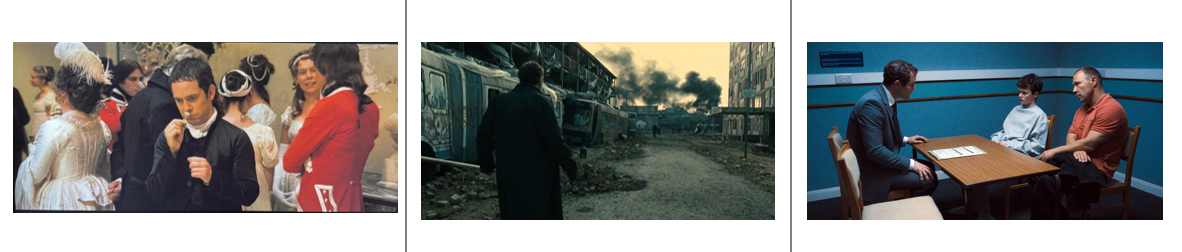
Pride and Prejudice (2005)
The Netherfield ball scene is a masterclass in controlled chaos. The camera weaves through dancers, picks up conversations, and follows the Bennet family navigating the ball and all the personalities and follies unfolding in real time. It's telling and suffocating at the same time, and that's the point.
Children of Men (2006)
Alfonso Cuarón's dystopian masterpiece has several legendary long takes, but the car ambush sequence is the one that broke my brain. The camera is inside the car as chaos erupts outside. Blood hits the lens. The tension is unbearable. It doesn't feel like a movie, it feels like you're there.
Adolescence (2025)
This Netflix limited series took it to another level. Each episode, ranging from 51 to 65 minutes, is filmed in a single take. Not edited to look like one, actually one take. The rawness is overwhelming. You can't escape the weight of what you're watching because the camera never gives you a break.
The Philosophy Behind It
Here's what I think the oner is really about: authenticity.
Cuts are lies. Every edit is a choice to skip time, change perspective, control what you see. That's powerful, and most filmmaking depends on it. But when you remove the cuts, you're saying: this is real. This is happening. You're going to experience it the way it actually unfolds.
There's a rawness to it that audiences feel even if they can't articulate it. The imperfections, the breathing room, the sense that anything could go wrong. That's the magic.
Why You See It at Keynotes
So why do oners show up at corporate events and tech keynotes?
Developer audiences can smell inauthenticity from a mile away. They know when something's been polished to death, when the rough edges have been sanded off until there's nothing real left. A oner signals the opposite: this is unfiltered. This is happening. We're not hiding behind edits. Yes, it takes planning and rehearsal to pull off, but what you're seeing is still real. The mistakes that happen, happen. The energy is genuine. That's the kind of authenticity that resonates with technical audiences.
Also, let's be honest: there's usually an excited video producer who sold the idea to the stakeholders and just wants to nerd out.
One We've Done
You'll see a cut to a slide at the 60-second mark, but that was necessary to display the content. The actual walk-and-talk was done in a single 5-minute take.
The Greatest Tech Oner I've Ever Met
I can't write about oners without mentioning Charles Torre. Charles was the undisputed king of the single-take tech conversation.
The man could record hour-plus conversations, just talking to developers about code, architecture, the meaning of life in software, and somehow keep it interesting the entire time. No cuts. No breaks. No "let's pick that up again." Just pure, uninterrupted technical discourse that somehow never felt like a lecture.
Check out this example of one of his infamous oners.
The Philosophy We Hold True
This is why the oner matters to me, and why it connects to everything we try to do here at DevRel Studios:
Real and raw beats polished and perfect.
The oner is the purest expression of that philosophy. No hiding. No shortcuts. Just the moment, unfolding in real time, with all its imperfections and energy intact.
That's what we're always chasing, whether it's a single-take walk-and-talk with a product leader or a weekly show where we keep the rough edges in. The craft is in the authenticity.
And when you nail a oner? There's nothing like it.
Comments